
Relational Purpose Practice Model: A Transformational Approach to Care
The following three phases provide the organizing treatment framework. They describe changing support needs and readiness for greater independence, not fixed time periods or a point-based privilege ladder. A resident may demonstrate different levels of competence across skills and settings. Supports are increased, maintained, or faded in response to assessed need, safety, successful skill use, and the resident's ability to seek help; necessary accommodations and rights are never removed as a reward or consequence.
This structured approach shifts the focus: Relational safety instead of compliance; Dignity and voice instead of control; Family and natural supports instead of isolation; Purpose and community instead of token activities; Accountable stewardship instead of opaque systems
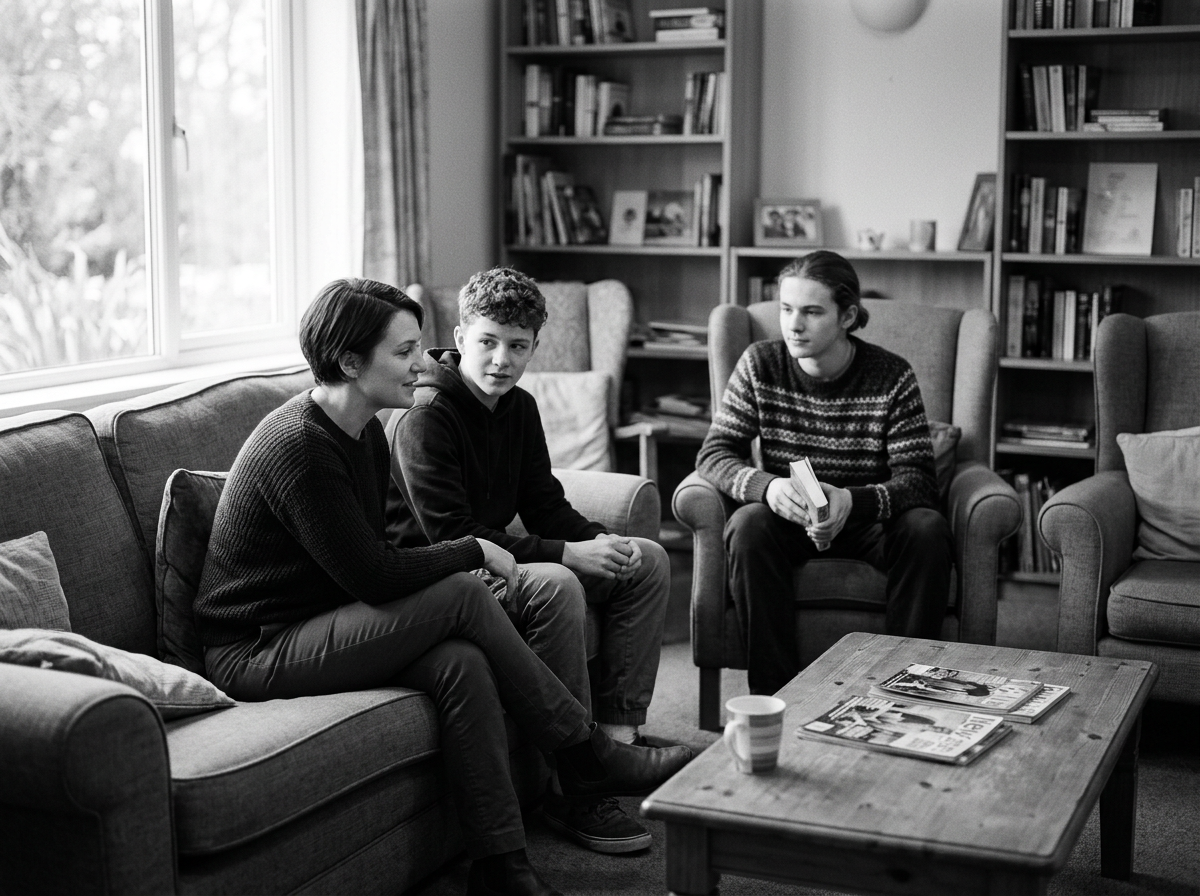
PHASE I
Relational Safety & Co-RegulationSafety first. Connection always. Youth learn who they can trust, how to ask for help, and how to feel steady again.
Staff build trust, learn the resident’s communication and coping patterns, establish predictable routines, and provide external structure. They model regulation, offer accessible choices, identify strengths and interests, and help the resident ask for support.
Assessment informs individualized treatment, safety, and communication plans. Transition work begins by identifying the resident's preferred future, likely next setting, essential relationships, current support network, and the routines and accommodations that must be preserved across settings.
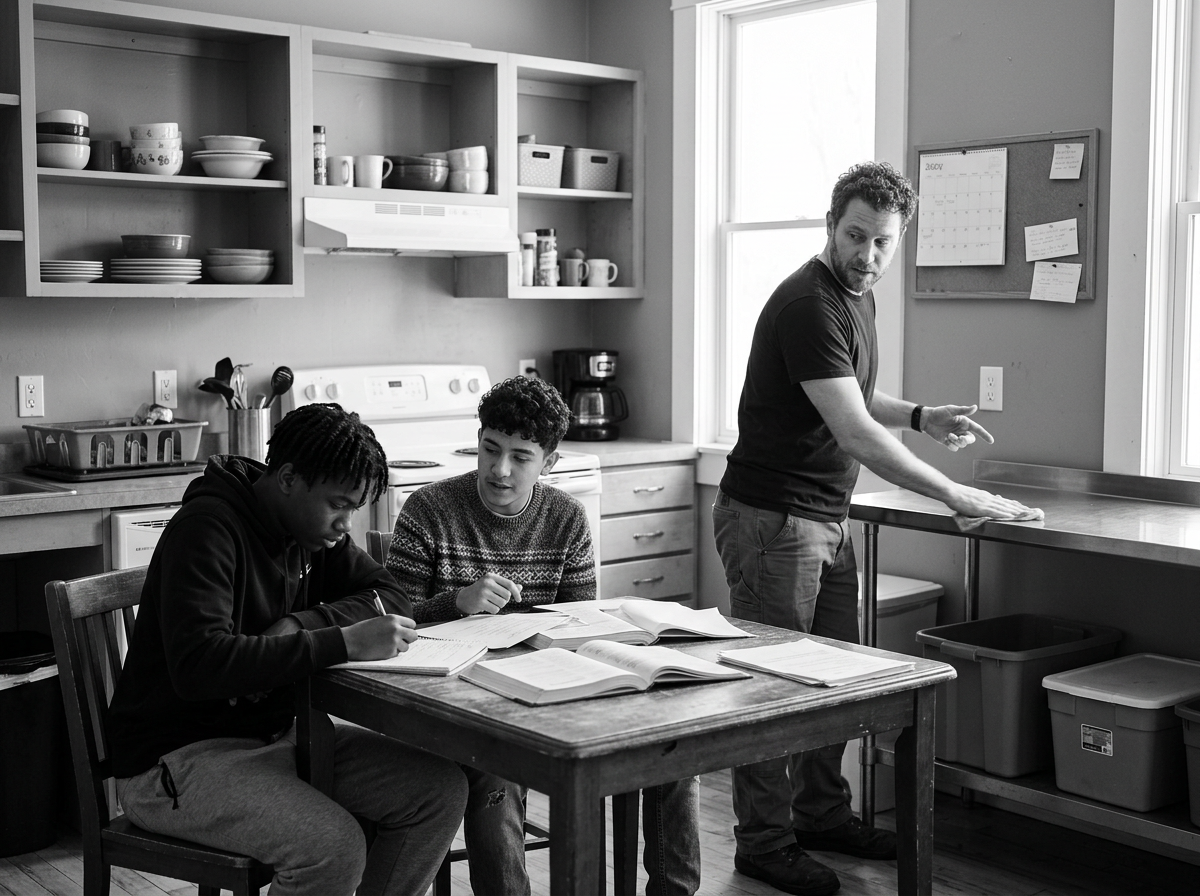
PHASE II
Skill Acquisition & Practice
Learning through real life. Youth practice communication, regulation, planning, problem‑solving, and self‑advocacy across real settings.
The resident learns and practices coping, functional communication, problem-solving, daily living, relationship, and decision-making skills. Staff use modeling, task sequencing, rehearsal, visual supports, positive reinforcement, supported reflection, and practice in ordinary activities. Family and community partners help skills transfer beyond the residence. Transition preparation makes the future concrete: the team identifies skills required in the anticipated home, school, work, transportation, health-care, and community settings and deliberately practices them with the people and conditions likely to be present after discharge.
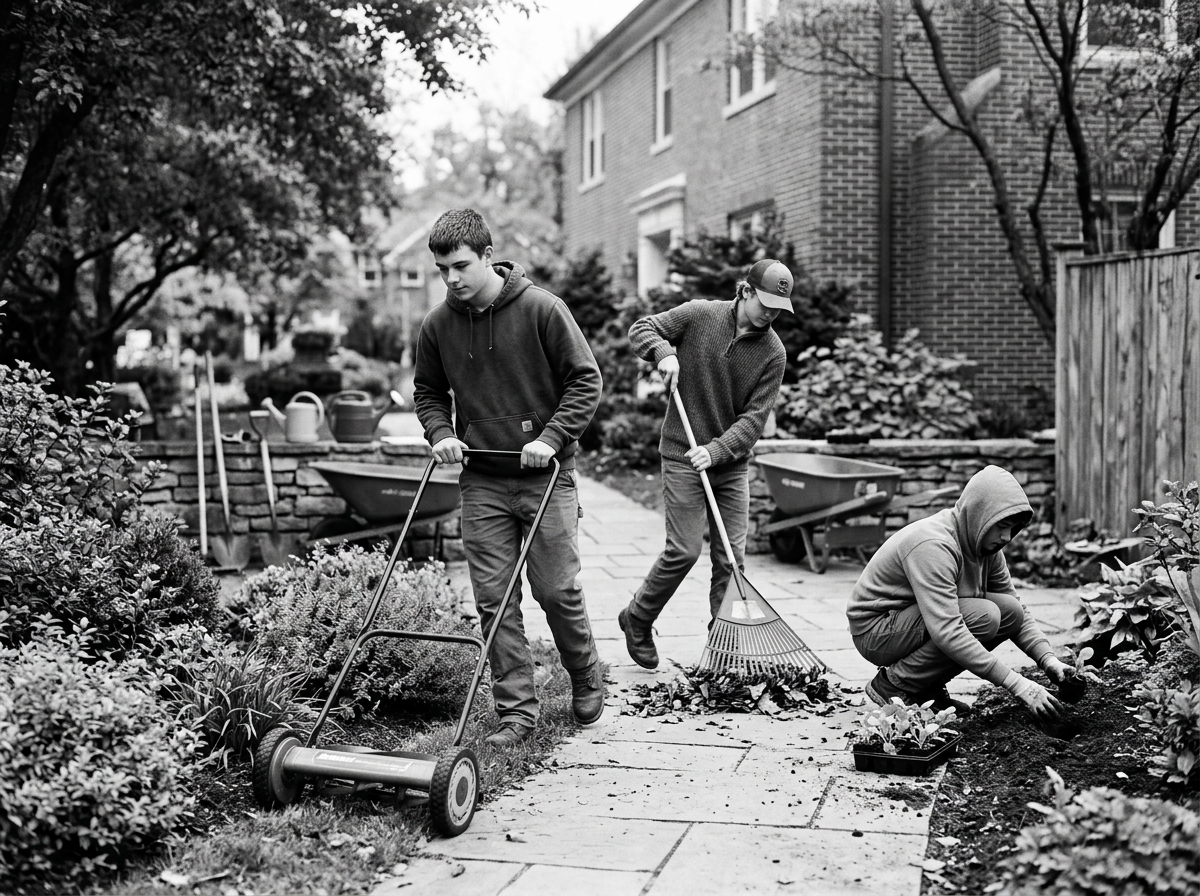
PHASE III
Integration & Supported Autonomy
Becoming who you are. Youth take ownership of routines, decisions, community roles, and transition goals — with support when needed.
The resident increasingly directs choices, uses skills in varied settings, and takes meaningful responsibility with individualized support. Staff shift toward coaching and consultation, rehearse transition needs with caregivers and receiving providers, and retain necessary disability-related accommodations. Support increases again when assessment indicates a need.
The resident practices the actual routines of the next setting, participates in handoff meetings, identifies early warning signs and preferred help, and completes supported trials of greater independence whenever safe and feasible.